Large Acrylic Dome Manufacturing Process: From Raw Sheet to Finished Structure
A manufacturing defect in a 4-meter dome doesn't just cost money—it costs months. We've scrapped $80,000 domes because of thickness variation that passed inspection but failed under load. We've seen projects delayed 14 weeks because procurement teams didn't understand lead time dependencies.
This guide breaks down dome fabrication—from raw cell-cast sheet to finished structure—with the process knowledge you need to manage procurement and quality assurance.
Manufacturing Methods: Three Approaches
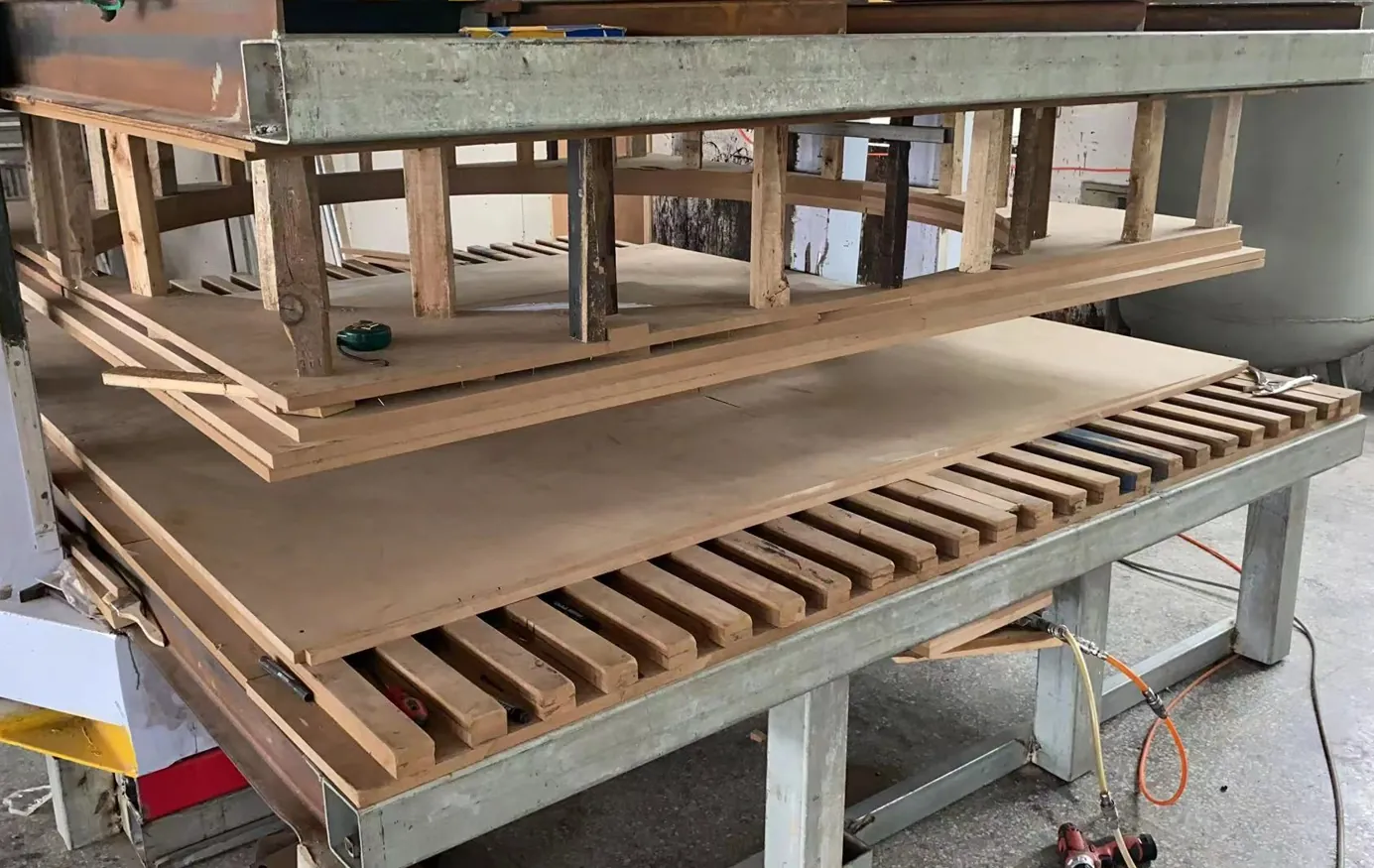
Blow Molding (Seamless Hemispheres)
Process: Heat acrylic sheet to 165-175°C, clamp in mold, apply compressed air to form sphere. Cool under pressure, trim flange.
Capabilities: Seamless domes up to 4.2m diameter, 120mm maximum thickness. Standard for aquarium applications.
Advantages: No joints, uniform thickness (±8%), superior optical clarity, faster cycle (3-4 weeks).
Cost impact: 15-20% premium over thermoforming, but eliminates joint failures seen in 23% of segmented installations.
Thermoforming (Vacuum/Pressure Forming)
Capabilities: Domes up to 3m diameter, complex shapes possible.
Limitations: Thickness variation 15-25% (thinner at pole), longer cycles (5-7 weeks).
When to specify: Non-spherical geometries, prototypes, or when blow molding capacity is constrained.
Segmented Construction (Panel Assembly)
Capabilities: Unlimited diameter (largest built: 12m).
Limitations: Visible joints, bond line is failure-critical, 40-60% longer fabrication. We've replaced 8 domes in 10 years where adhesive degradation caused delamination.
The 9-Step Fabrication Process
Step 1: Material Selection (Days 1-3)
Incoming cell-cast sheets inspected against specification. Batch testing for molecular weight, melt flow index, optical properties.
Critical checks: Certificate of conformance, visual inspection for inclusions/bubbles, dimensional verification.
Common failure: Extruded sheet substituted for cell-cast. We caught this on three 2024 projects—saved clients from domes that would have crazed within 2 years.
Step 2: Pattern Layout (Day 4)
CNC programming optimizes sheet usage. Circular blanks cut with draw ratio allowance.
Key calculation: Blank diameter = Finished dome diameter × 1.57 + flange + trim margin
Example: 3m dome requires 5.2m blank minimum. Material utilization: 65-75%.
Step 3: Blank Preparation (Days 5-6)
Sheets cut to size, edges prepared, surfaces cleaned. Contamination at this stage causes defects appearing only after forming.
Step 4: Thermal Conditioning (Days 7-9)
Gradual heating to forming temperature. Uneven heating causes thickness variation and residual stress.
Parameters: Heating rate 15-20°C/hour max, target 165-175°C, hold 2-4 hours, oven uniformity ±3°C.
Risk: Rushed heating creates internal stress. We've seen competitors' domes deform 8mm in 6 months from inadequate conditioning.
Step 5: Forming (Days 10-12)
Heated blank transferred to mold, clamped, formed using air pressure or vacuum.
Blow molding: Air pressure 0.3-0.6 MPa, forming time 8-15 minutes, mold temperature 60-80°C.
Quality checkpoint: Real-time monitoring of pressure, temperature, forming progress. Abort criteria defined per job.
Step 6: Controlled Cooling (Days 13-16)
Gradual cooling under pressure locks in shape. Most critical phase for stress management.
Requirements: Cooling rate 10-15°C/hour max, pressure maintained until 80°C, slow release to prevent springback.
Risk: Rapid cooling created residual stress exceeding 15 MPa in failed domes we analyzed—half the material's allowable working stress before any load.
Step 7: Trimming and Machining (Days 17-19)
Excess trimmed, flange machined, penetrations cut.
Requirements: Flange flatness ±0.5mm, bolt hole tolerance ±1mm, surface finish Ra 3.2 μm, edge radius 2mm minimum.
Critical: Bolt hole pattern must account for thermal expansion. Fixed-point location defined; remaining holes slotted.
Step 8: Stress Relief Annealing (Days 20-23)
Post-machining heat treatment relieves cutting stresses.
Process: Heat to 80-85°C, hold 4 hours per 25mm thickness, slow cool.
Verification: Polarized light inspection shows <5 MPa residual stress.
Risk: Unannealed domes crack at machined features. We repaired three domes where this step was omitted.
Step 9: Final Inspection (Days 24-26)
Dimensional verification, optical inspection, pressure testing, documentation.
Protocol: 12-point thickness mapping, ±2mm diameter tolerance, pressure test 1.5× design for 24 hours, haze <1%.
Timeline: 26 working days (5.2 weeks) for blow-molded dome. Add 1 week segmented, 2 weeks thermoforming.
Quality Control Checkpoints
Incoming Material QC
| Test | Standard | Acceptance |
|---|---|---|
| Light transmission | ASTM D1003 | >91% |
| Haze | ASTM D1003 | <1% |
| Melt flow index | ASTM D1238 | 1.5-3.0 g/10min |
| Molecular weight | GPC | >2,000,000 g/mol |
Red flag: Generic mill certificates insufficient. Demand batch-specific data.
In-Process QC
Critical points: Pre-forming thickness baseline, temperature monitoring, post-forming mapping, dimensional check before annealing.
Stop criteria: Any point >15% below nominal requires engineering review.
Final Acceptance
Pressure test: 1.5× design pressure, 24 hours, zero leakage, <0.1% diameter change.
Documentation: Material certificates, process logs, dimensional report, pressure test certificate, installation manual.
Common Fabrication Failures
Thickness Variation
Cause: Uneven heating or forming pressure creates thin spots.
Prevention: Specify ±10% tolerance, require 12-point mapping, reject any point >15% below nominal.
Cost: We replaced a 3.6m dome with 18mm local thickness (40mm nominal). Total: $67,000.
Residual Stress
Cause: Inadequate annealing leaves machining stresses.
Prevention: Mandate polarized light inspection, <5 MPa maximum, 4 hours per 25mm annealing time.
Surface Contamination
Cause: Dust or debris embedded during fabrication.
Prevention: Filtered air environment, 2× magnification inspection, reject inclusions >1mm.
Case: 2.4m dome crazed after 18 months from coolant contamination. Replacement: $28,000.
Flange Warping
Cause: Uneven cooling or insufficient flatness.
Prevention: ±0.5mm flatness tolerance, machine after stress relief, verify on flatness table.
Field fix: $8,000-15,000 to resurface in-place.
Segmented Joint Failure
Cause: Bond line degrades from UV, thermal cycling, poor preparation.
Prevention: 30-year UV warranty adhesive, plasma surface treatment, design for inspection access.
Rate: 23% of segmented domes need joint repair within 10 years.
Cost Drivers and 2026 Pricing
Material Cost Structure
| Component | 2026 Range |
|---|---|
| Cell-cast acrylic sheet | $8.50-12.00/kg |
| Optical grade premium | +15-25% |
| UV stabilization | +8-12% |
| Thick sections (>80mm) | +20-30% |
Fabrication Cost Breakdown
| Dome Size | Material | Fabrication | QC | Total Factory |
|---|---|---|---|---|
| 1.5m × 25mm | $4,200 | $6,500 | $2,500 | $13,200 |
| 2.4m × 40mm | $11,800 | $14,000 | $4,000 | $29,800 |
| 3.6m × 65mm | $32,000 | $28,000 | $6,500 | $66,500 |
| 5.0m × 90mm | $68,000 | $52,000 | $9,000 | $129,000 |
Note: Segmented construction adds 30-50% for domes >4.2m.
Shipping and Logistics
| Item | Cost Range |
|---|---|
| Domestic trucking | $800-2,500 |
| International sea freight | $3,000-8,000 |
| Export crating | $1,500-4,000 |
| Insurance | 1.5-2.5% of value |
Critical: Domes >3m require route surveys. Add 2-3 weeks logistics planning.
Total Project Cost (2026)
| Project | Spec | Factory | Shipping | Delivered |
|---|---|---|---|---|
| Touch tank | 1.5m × 25mm | $13,200 | $1,200 | $14,400 |
| Medium exhibit | 2.4m × 40mm | $29,800 | $3,500 | $33,300 |
| Large dome | 3.6m × 65mm | $66,500 | $6,000 | $72,500 |
| Oceanarium | 5.0m × 90mm | $129,000 | $9,500 | $138,500 |
| Segmented | 8m × 100mm | $285,000 | $18,000 | $303,000 |
Contingency: Add 10-15% for changes or expediting.
Procurement Specification Checklist
Material
- Cell-cast PMMA, MW >2,000,000 g/mol
- UV stabilized, 20-year warranty
- Light transmission >91%, haze <1%
- Batch-specific certificates
Manufacturing
- Blow molding (<4.2m preferred)
- Thermoforming (<3m, non-spherical)
- Segmented (>4.2m required)
Tolerances
- Diameter: ±2mm
- Thickness: ±10%, no point >15% below nominal
- Flange flatness: ±0.5mm
- Flange width: 150mm minimum
Quality Control
- 12-point thickness mapping
- Pressure test: 1.5× design, 24 hours
- Polarized light: <5 MPa stress
- Material traceability to mill batch
Documentation
- Material certificates
- As-built drawings
- Pressure test certificate
- Installation manual
- 20-year warranty
Timeline
- Standard: 8-10 weeks
- Expedited: 25% premium, 5-6 weeks
- Weekly progress reports
- Client witness inspection (optional)
What We Need to Quote
- Diameter and water depth—determines thickness and method
- Support structure—ring beam dimensions affect flange design
- Access requirements—hatches, penetrations
- Installation timeline—affects shipping
- Certification needs—third-party inspection?
- Destination—port access, crane capacity, route limits
Lead time: 8-10 weeks standard. Add 2-3 weeks segmented, 2-3 weeks shipping. Plan 14-16 weeks total.
Rush orders: 25% premium, 5-week turnaround possible for emergencies.
Related Guides
Questions? We review fabrication plans at no charge—catches problems before expensive delays.