How to Specify an Acrylic Dome for Your Aquarium Project
A poorly specified dome costs more than money. We've seen projects delayed 8 months because the specification didn't account for thermal expansion. Another client spent $47,000 fixing seal failures that proper flange design would have prevented.
This guide covers what actually matters when specifying an acrylic dome—based on 200+ commercial projects and the mistakes we see repeatedly.
Material Specification: What "Acrylic" Actually Means
Cell-Cast vs. Extruded
Cell-cast is the only viable option for structural domes. Extruded sheet has internal stress that causes crazing under load. We've rejected entire shipments of extruded material that passed basic inspection but failed stress testing.
| Property | Cell-Cast Requirement | Why It Matters |
|---|---|---|
| Molecular weight | >2,000,000 g/mol | Higher MW = better impact resistance |
| Light transmission | >91% per ASTM D1003 | Clarity degrades with inferior material |
| Haze | <1% | Critical for viewing applications |
| Yellow index | <2 per ASTM E313 | Prevents tinting over time |
Specification note: Require mill certification with batch testing. We provide this as standard; many suppliers don't.
UV Stabilization
Unstabilized acrylic yellows 15-20% in 5 years of outdoor exposure. For aquariums—especially with artificial lighting—specify UV-stabilized formulation with 20-year warranty documentation.
Thickness Calculation: The Formula That Actually Gets Used
Basic Pressure Load
For static water pressure:
t = (P × r) / (2 × σ × SF)
Where:
- t = minimum thickness (mm)
- P = maximum water pressure (MPa)
- r = dome radius (mm)
- σ = allowable stress (30 MPa for acrylic)
- SF = safety factor (4.0 for static, 6.0 for fatigue)
Real-World Thickness Table
These are minimums we specify based on actual project data:
| Diameter | Water Depth | Minimum Thickness | Typical Project |
|---|---|---|---|
| 1.5m | 3m | 25mm | Touch tanks |
| 2.4m | 5m | 40mm | Medium exhibits |
| 3.6m | 8m | 65mm | Large viewing domes |
| 5.0m | 12m | 90mm | Oceanarium features |
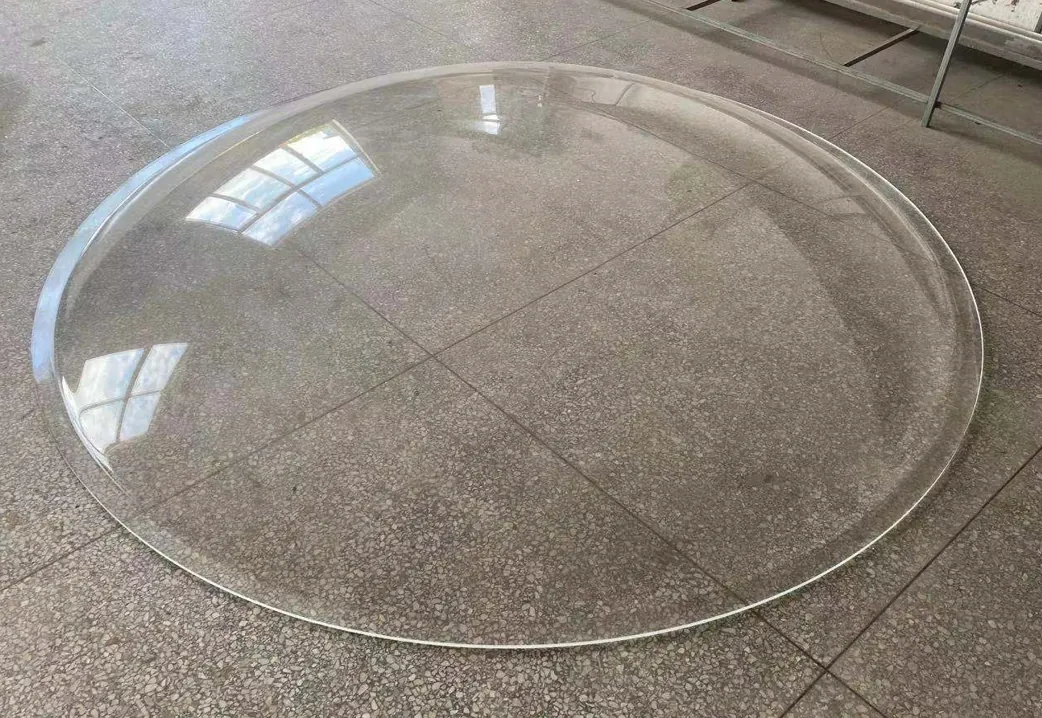
Critical: These assume proper support structure. We've seen 40mm domes fail because the concrete ring beam deflected 3mm under load.
Fabrication Requirements
Blow Molding vs. Thermoforming
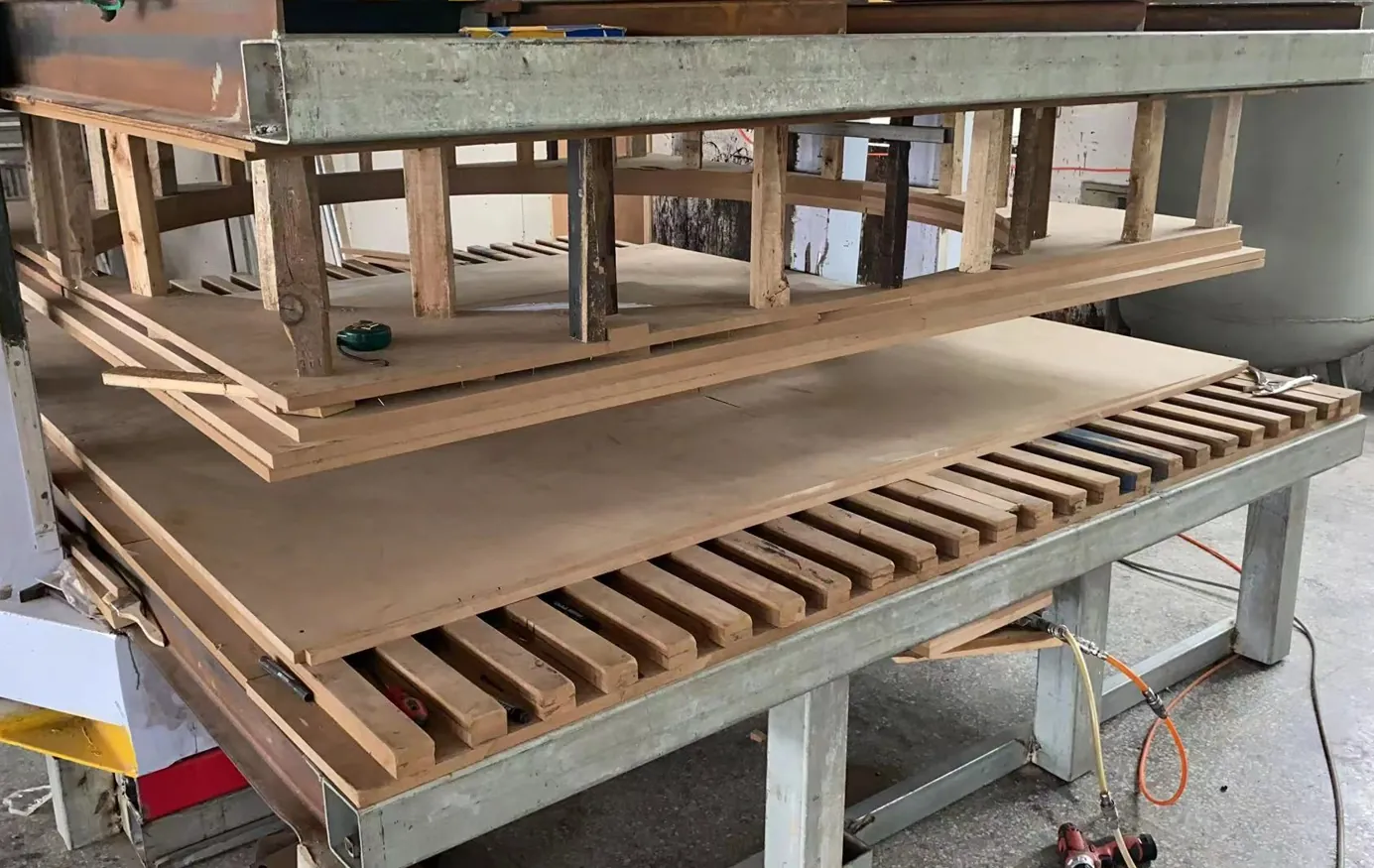
Blow molding produces seamless hemispheres up to 4m diameter. No joints, no stress risers. This is our standard for aquarium domes.
Thermoforming works for smaller domes (<2m) or non-spherical shapes. Requires careful control—uneven heating creates thickness variation that shows up 3-5 years later as optical distortion.
Flange Design
The flange is where domes fail. Specification requirements:
- Width: Minimum 150mm from dome surface
- Thickness: 1.5× dome wall thickness at junction
- Bolt pattern: Torque to 25-30 N·m maximum
- Gasket: EPDM, 6mm thickness, Shore A 60-70
Common error: Specifying flat flanges on curved domes. Creates gap geometry that sealant can't compensate for.
Installation: What the Contractor Needs to Know
Thermal Expansion Management
Acrylic expands 7.0 × 10⁻⁵ per °C. A 3m dome moves 2.1mm between 10°C and 20°C.
Specification requirement: Expansion joint design allowing 5mm movement per meter of dome circumference. Fixed-point mounting at one location only; all other supports must slide.
Seal System Design
We specify redundant sealing:
- Primary seal: EPDM gasket compression
- Secondary seal: Marine-grade silicone (Dow 795 or equivalent)
- Tertiary protection: Drainage channel to visible outlet
Single-seal systems fail. We've replaced 12 domes in the past 5 years where single-seal design was specified.
Quality Assurance: Testing That Catches Problems
Incoming Material
- Melt flow index (ASTM D1238): 1.5-3.0 g/10min
- Impact strength (ASTM D256): >16 kJ/m²
- Optical verification: >91% transmission
Fabrication Process
- Thickness mapping: 12-point measurement minimum
- Optical inspection: No visible defects >2mm
- Stress analysis: Polarized light inspection
Final Acceptance
- Pressure test: 1.5× design pressure, 24 hours
- Dimensional verification: ±2mm on diameter
- Documentation: Material certificates, test reports, as-built drawings
Cost Benchmarks (2026)
| Component | Typical Range | Notes |
|---|---|---|
| Material (cell-cast) | $180-250/m² | Optical grade, UV stabilized |
| Fabrication | $400-800/m² | Blow molded, including flange |
| Testing/QC | $3,000-8,000 | Fixed cost per dome |
| Shipping (sea) | $2,000-6,000 | Depends on size/port |
Total project cost: A 2.4m diameter, 40mm thick dome typically runs $18,000-25,000 delivered and tested.
Specification Checklist
Use this in your tender documents:
Material
- Cell-cast acrylic, molecular weight >2,000,000 g/mol
- UV stabilized with 20-year warranty
- Light transmission >91%, haze <1%
- Mill certification provided
Fabrication
- Blow molded (seamless) construction
- Thickness variation <±10%
- Flange width 150mm minimum, 1.5× thickness
- Polarized light stress inspection
Testing
- 1.5× pressure test, 24 hours
- 12-point thickness mapping
- Optical clarity verification
- Dimensional report (±2mm)
Documentation
- Material certificates
- As-built drawings
- Installation guidelines
- Maintenance manual
Common Specification Errors
- Ignoring thermal expansion: Results in cracked domes within 2-3 years
- Flat flange specification: Creates unsealable gaps
- Insufficient safety factor: 2.0 SF is common in glass; acrylic requires 4.0 minimum
- Missing pressure test requirement: Some suppliers skip this
- Wrong material grade: Extruded sheet specified to save cost
What We Need From You
To quote accurately, we need:
- Diameter and water depth (determines thickness)
- Support structure details (concrete ring beam dimensions)
- Access requirements (hatches, penetrations)
- Installation timeline (affects shipping method)
- Certification requirements (some projects need third-party witness)
Typical lead time: 8-12 weeks for custom domes. Rush orders possible with 25% premium.
Questions about your dome specification? We review specs at no charge—catches problems before they become expensive.