NIJ Ballistic Visor Standards: What Procurement Officers Need to Know
We've manufactured ballistic visors for military units, police departments, and private security firms. The most common problem we see: procurement specifications that don't match actual threat requirements. Departments over-specify (paying for protection they don't need) or under-specify (creating liability exposure).
This guide explains NIJ standards in procurement terms—what each level actually stops, what it costs, and how to specify correctly.
NIJ Protection Levels: What Actually Gets Stopped
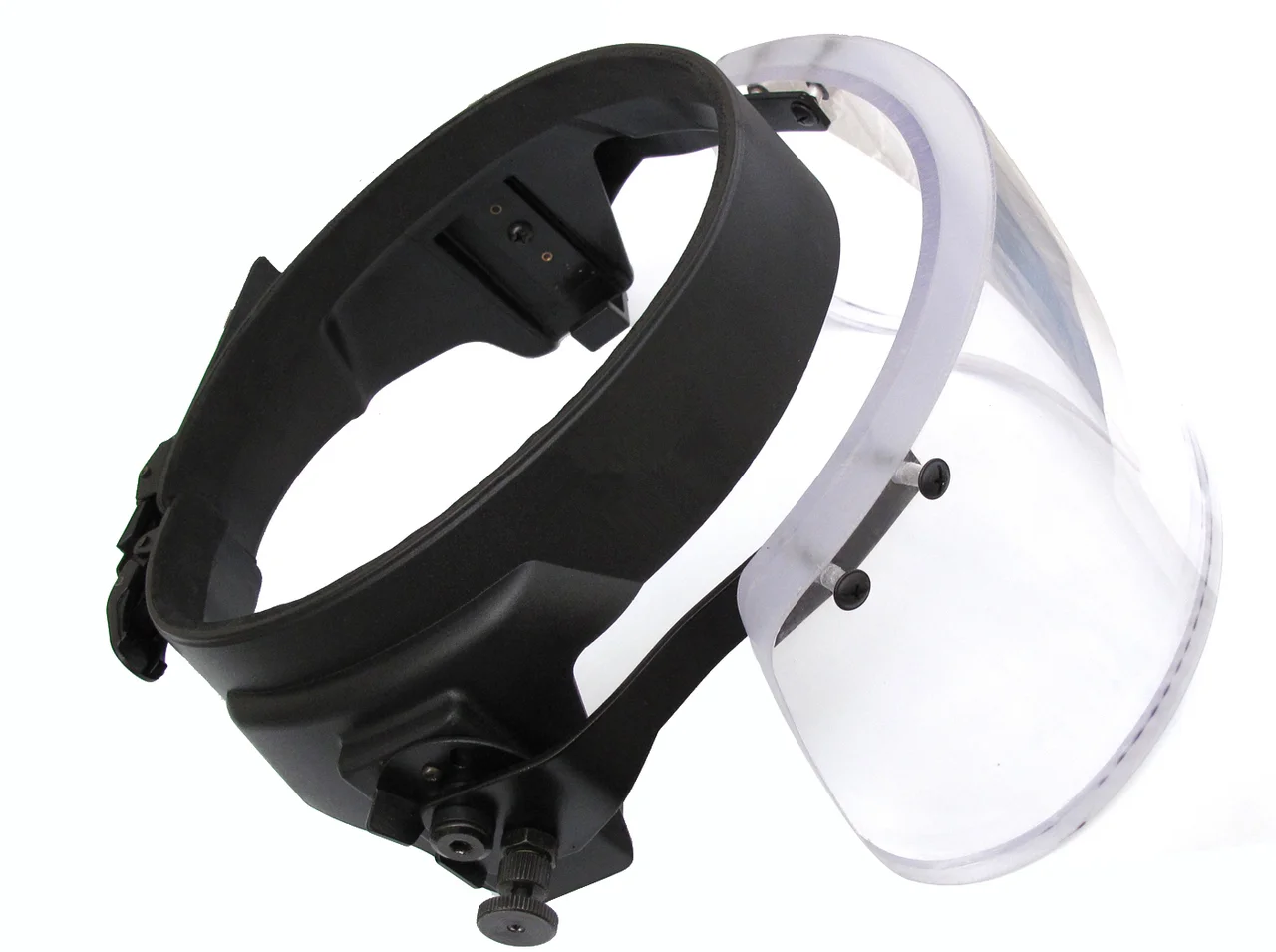
Level IIA: Minimum Protection
Stops: 9mm FMJ (1,225 ft/s), .40 S&W FMJ (1,155 ft/s)
Use case: General security, low-risk patrol. We rarely manufacture Level IIA—most clients need higher protection for marginal cost difference.
Weight: 1.5-2.0 lbs | Thickness: 15-20mm | Cost: $200-400
Level II: Standard Handgun Protection
Stops: 9mm FMJ (1,305 ft/s), .357 Magnum JSP (1,430 ft/s)
Use case: Law enforcement patrol, security guards. Handles most common street threats.
Weight: 2.0-2.5 lbs | Thickness: 20-25mm | Cost: $300-600
Level IIIA: Maximum Handgun Protection (Most Common)
Stops: .357 SIG FMJ (1,470 ft/s), .44 Magnum SJHP (1,430 ft/s)
Use case: Military tactical, special response teams, executive protection. Covers 95%+ of handgun threats including high-velocity rounds.
Weight: 2.5-3.5 lbs | Thickness: 25-35mm | Cost: $500-1,000
Our recommendation: Level IIIA for any tactical application. The $200-400 premium over Level II buys protection against magnum rounds that standard 9mm vests won't stop.
Level III: Rifle Protection
Stops: 7.62mm NATO FMJ (2,780 ft/s)
Reality check: Level III visors are extremely heavy (5+ lbs) and rarely used. Most tactical applications use Level IIIA with supplementary rifle-rated body armor.
The Test Process: What "NIJ Certified" Actually Means
Sample Preparation
- 6 visors minimum per test batch
- Conditioned at 70°F, 50% humidity for 24 hours
- Mounted on standardized backing material (clay backing simulates human tissue)
Ballistic Testing Protocol
Test conditions:
- Distance: 5 meters (16.4 feet)
- Angle: 0° (perpendicular impact)
- Temperature: 70°F ± 5°F
Impact requirements:
- Minimum 3 shots per visor
- Spaced minimum 3 inches apart
- No complete penetration allowed
- Backface deformation < 44mm (1.73 inches)
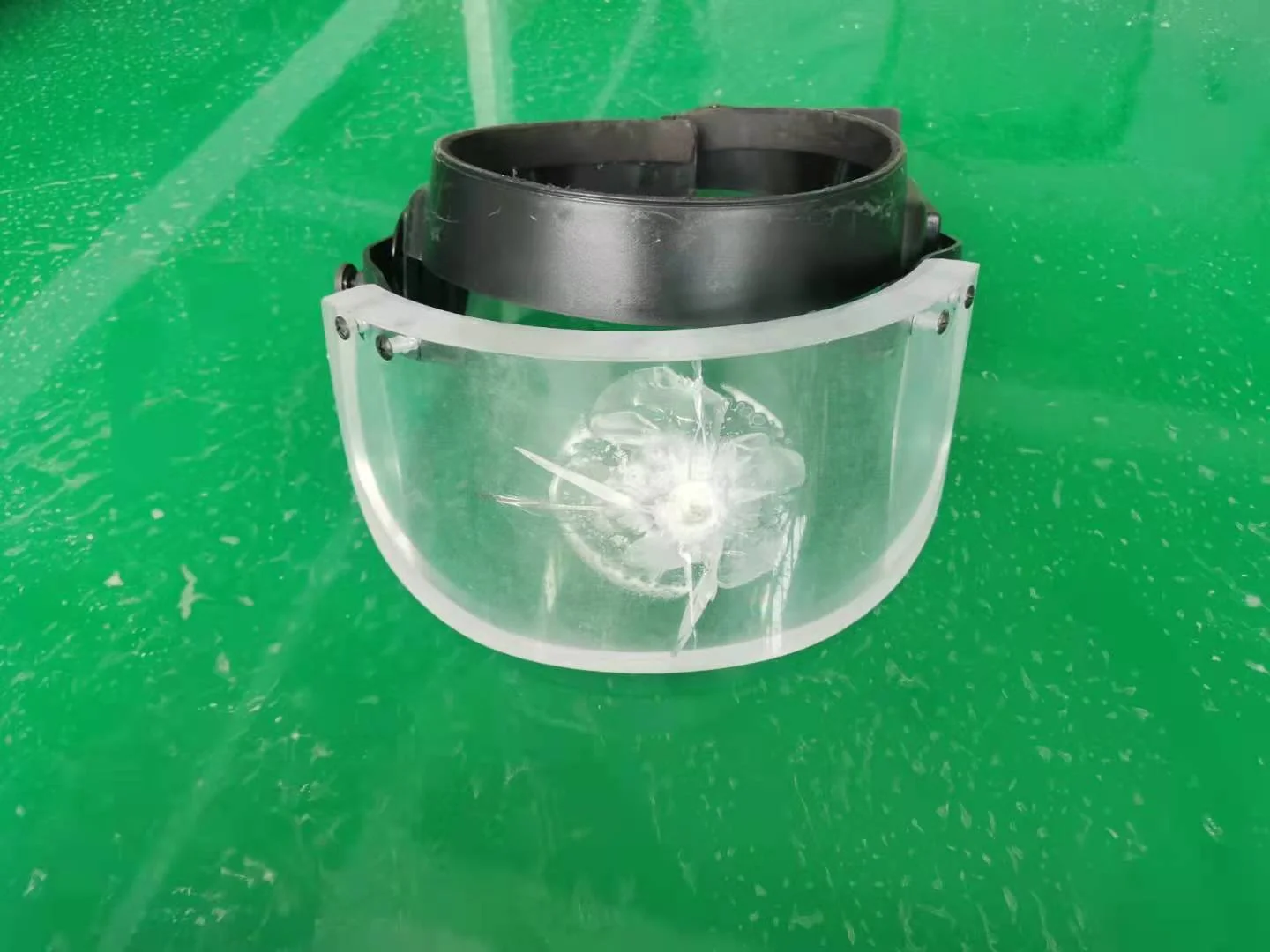
What this means practically: A certified visor stops the specified rounds without allowing dangerous backface deformation that could cause blunt trauma injury.
Certification Documentation
Legitimate NIJ certification includes:
- Certification letter from NIJ-approved laboratory
- Test report with impact data and photographic evidence
- Quality control records showing production consistency
Red flag: "Tested to NIJ standards" without certification letter. Testing and certification are different—only certified products meet procurement requirements for most government contracts.
Post-Coating vs Pre-Coating: Why It Matters
Pre-Coating (Traditional Process)
How it works: Coating applied to flat sheet, then thermoformed into visor shape.
The problem: Thermoforming requires 160-180°C. Most coatings degrade at these temperatures—cracking, delamination, or optical distortion. We've tested pre-coated visors where coating integrity was compromised 30-40% after forming.
Result: Reduced scratch resistance, shorter service life, potential ballistic weak points where coating cracked.
Post-Coating (Our Process)
How it works: Visor thermoformed first, then coated after shaping.
Advantages:
- Coating applied at room temperature—no thermal degradation
- Complete coverage including formed edges
- Optical clarity maintained
- Coating adhesion verified per ASTM D3359 (cross-hatch test)
Specification note: Require post-coating process for any ballistic visor application. The cost difference is minimal ($30-50/unit); the performance difference is significant.
Specification Requirements for Procurement
Minimum Specification
Protection level: NIJ Level IIIA
Certification: Current NIJ certification letter required
Coating process: Post-coating, both surfaces
Coating hardness: 2H pencil hardness minimum per ASTM D3363
Coating adhesion: 4B minimum per ASTM D3359
Light transmission: >85%
Weight: <3.5 lbs
Thickness: 25-35mm
Quality Assurance Requirements
Material traceability: Batch certification for all materials
Production testing: 100% optical inspection, random ballistic sampling
Documentation: Test reports, material certificates, as-built dimensions
Warranty: 5-year minimum against defects
Fit and Compatibility
Critical specification often overlooked: visor must interface correctly with helmet.
Requirements:
- Specify helmet model/brand
- Require fit verification sample
- Define adjustment range (±10mm typical)
- Specify retention system compatibility
Common problem: Visor certified to NIJ standards but doesn't fit department's helmet inventory. Results in gaps that reduce protection or visibility.
Cost Analysis: What Drives Price
Material Costs (2026)
| Component | Cost Range |
|---|---|
| Polycarbonate substrate | $80-120 |
| Ballistic coating (post-coating) | $60-100 |
| Hard coat (scratch resistance) | $40-60 |
| Hardware/retention | $30-50 |
| Testing/QC allocation | $50-80 |
| Total material | $260-410 |
Manufacturing Costs
| Process Step | Cost |
|---|---|
| Thermoforming | $80-120 |
| Post-coating application | $100-150 |
| Quality inspection | $40-60 |
| Assembly/packaging | $30-50 |
| Total manufacturing | $250-380 |
Final Pricing
| Level | Typical Price | Volume Discount (100+) |
|---|---|---|
| Level II | $350-550 | 15-20% |
| Level IIIA | $550-950 | 15-20% |
Price drivers: Thickness (material), coating quality, certification level, order volume.
Maintenance and Service Life
Inspection Schedule
| Frequency | Inspection Items |
|---|---|
| Daily | Visual check for cracks, coating damage |
| Weekly | Clean, check optical clarity |
| Monthly | Detailed damage assessment, retention system check |
| Annually | Professional inspection, replace if >5 years old |
Replacement Criteria
Replace immediately if:
- Any impact or drop (even if no visible damage)
- Visible cracks, crazing, or coating delamination
- Deformation >5mm from original shape
- Age >5 years (regardless of condition)
Why 5 years: Polycarbonate degrades from UV exposure and environmental stress even without impacts. We've tested 7-year-old visors that passed visual inspection but failed ballistic testing.
Common Procurement Mistakes
1. Specifying Level III for Handgun Threats
Level III adds 2+ lbs for rifle protection most units don't need. Level IIIA handles 95%+ of handgun threats at manageable weight.
2. Ignoring Helmet Compatibility
Visor certified to NIJ standards but incompatible with your helmet system creates protection gaps. Always specify helmet model and require fit samples.
3. "Tested to NIJ Standards" vs Certified
"Tested to standards" means manufacturer ran tests. "NIJ Certified" means independent lab verified and NIJ issued certification letter. For government contracts, certification is required.
4. Overlooking Coating Process
Pre-coated visors cost 10-15% less but have 40-50% shorter service life. Post-coating specification adds minimal cost, extends service life, maintains ballistic integrity.
5. No Replacement Timeline
Visors need replacement every 5 years regardless of condition. Budget for replacement cycle—don't wait for visible damage.
What We Need to Quote
To provide accurate pricing and specification:
- Protection level: II, IIIA, or III
- Quantity: Annual requirement, any immediate need
- Helmet compatibility: Brand/model visor must interface with
- Coating requirements: Anti-fog, anti-reflective, or standard
- Certification: NIJ certification required, or internal testing acceptable
- Timeline: Standard 6-8 weeks, or rush delivery needed
Sample program: We provide fit samples for helmet compatibility verification—no charge for qualified procurement evaluations.
Summary: Key Specification Points
| Element | Recommendation |
|---|---|
| Protection level | Level IIIA for tactical applications |
| Certification | Current NIJ certification letter |
| Coating process | Post-coating, both surfaces |
| Coating hardness | 2H minimum per ASTM D3363 |
| Weight | <3.5 lbs for Level IIIA |
| Warranty | 5-year minimum |
| Replacement | Every 5 years regardless of condition |
Questions about NIJ standards or ballistic visor specification? We provide technical consultation for procurement officers—no obligation.